
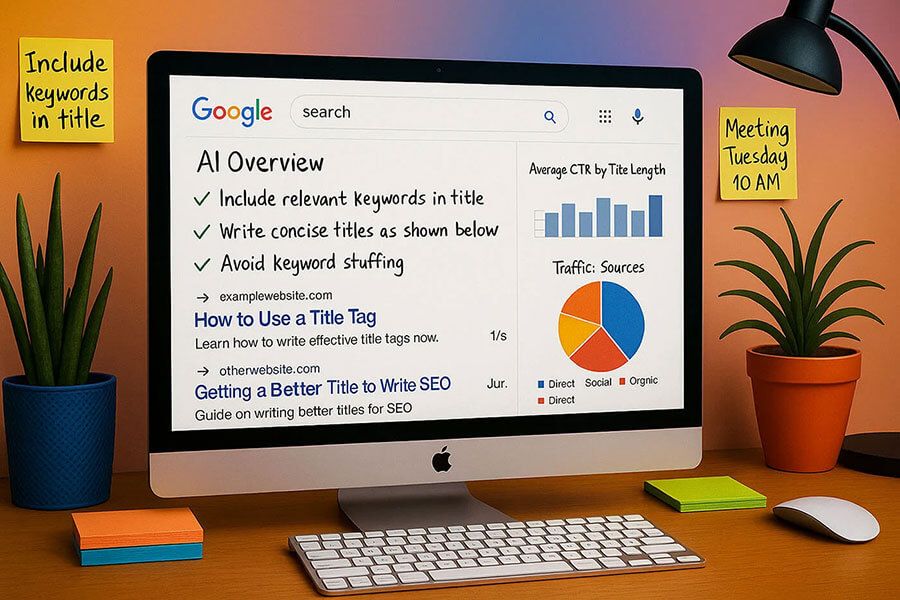
Search is changing faster than ever. With the rise of AI-powered summaries, conversational search, and instant answers, traditional SEO alone is no longer enough. If you want sustainable traffic in 2026 and beyond, you must learn how to optimize content for Google AI Overviews while also building a strong zero click SEO strategy.
This in-depth guide will show you exactly how to:
- Understand Google AI Overviews optimization
- Rank in Google AI results
- Optimize for zero click results without losing traffic
- Implement AI search optimization best practices
- Use structured data for AI search
- Build E-E-A-T for AI SEO
- Future-proof your blog against traffic loss
Let’s dive in.
What Are Google AI Overviews?
Google AI Overviews are AI-generated summaries that appear at the top of search results, providing direct answers by synthesizing information from multiple web sources. These summaries reduce the need for users to click individual websites and are part of Google’s evolving AI search experience.
Previously introduced under Search Generative Experience (SGE), AI Overviews combine traditional ranking signals with AI processing. Instead of showing just blue links, Google now generates contextual answers using multiple sources.
How AI Overviews Differ from Featured Snippets
- Featured Snippets pull a direct excerpt from one page.
- AI Overviews synthesize information from multiple pages.
- Featured snippets are extractive.
- AI summaries are generative.
This shift means you must optimize blog for AI generated answers, not just snippets.
How Do AI Overviews Affect SEO?
AI Overviews dramatically change visibility dynamics in search results.
1. Reduced Click-Through Rates (CTR)
Many searches now end without a click. Users get answers instantly.
2. Rise of Zero Click Searches
A zero click search happens when users find their answer directly on the SERP. If you don’t optimize for zero click results, you risk traffic loss.
3. Shift to Semantic & Entity-Based Ranking
Google now prioritizes:
- Semantic SEO strategy
- Entity based SEO
- Search intent optimization
- Contextual understanding
This is why SEO for AI Overviews requires deeper content rather than surface-level keyword placement.
How Do Zero Click Searches Work?
Zero click searches occur when Google provides the final answer directly within the search interface—through AI summaries, featured snippets, knowledge panels, or People Also Ask boxes.
To compete, you must:
- Optimize for People Also Ask
- Structure content clearly
- Improve passage ranking optimization
- Use conversational search SEO techniques
The goal is not just traffic—it’s authority and brand visibility.
Google AI Search Ranking Factors in 2026
Understanding Google AI search ranking factors is crucial if you want to rank in Google AI results.
Here are the core signals shaping AI search optimization:
1. E-E-A-T (Experience, Expertise, Authoritativeness, Trustworthiness)
E-E-A-T for AI SEO is more important than ever. AI models prefer credible, expert-backed content.
To strengthen E-E-A-T:
- Include author credentials
- Add real-world examples
- Cite trusted data sources
- Show practical experience
- Maintain transparent site policies
2. Entity Clarity
Entity based SEO helps AI understand relationships between concepts.
Instead of repeating keywords, connect ideas clearly:
- AI search
- Semantic structure
- Content authority
- Structured data
3. Structured Data Implementation
Structured data for AI search improves machine understanding.
Schema markup for AI Overviews helps Google interpret:
- FAQs
- Articles
- How-to guides
- Author information
Does structured data help AI search? Absolutely. While it doesn’t guarantee ranking, it enhances content comprehension.
4. Passage-Level Ranking
Passage ranking optimization means individual sections can rank independently. Each section must:
- Answer a clear question
- Provide concise summaries
- Use clean headings
How to Optimize Content for Google AI Overviews (Step-by-Step Framework)
Now let’s focus on the practical strategy to optimize content for Google AI Overviews effectively.
Step 1: Master Search Intent Optimization
Before writing, ask:
- What problem is the user solving?
- Is the query informational, navigational, or transactional?
- What follow-up questions might they ask?
Search intent optimization ensures AI selects your content as contextually complete.
Step 2: Structure Content for AI Search
If you want to know how to structure content for AI search, follow this format:
- Clear H2 and H3 headings
- Definition-style summaries (40–60 words)
- Bullet lists
- Tables when necessary
- Short paragraphs
This improves how to rank in AI search results.
Step 3: Optimize Blog for AI Generated Answers
To optimize blog for AI generated answers:
- Provide concise definition blocks
- Include step-by-step processes
- Use FAQ sections
- Avoid fluff
AI prefers clarity over complexity.
Step 4: Implement Schema Markup for AI Overviews
Schema markup for AI Overviews enhances machine readability.
Use:
- Article schema
- FAQ schema
- HowTo schema
- Author schema
Structured data for AI search supports contextual understanding.
Step 5: Optimize for People Also Ask
People Also Ask boxes are major zero-click features.
To optimize for People Also Ask:
- Use question-based headings
- Provide 40–60 word direct answers
- Add deeper explanation below
This supports how to get featured in Google AI answers.
Step 6: Build a Zero Click SEO Strategy
A strong zero click SEO strategy includes:
- Brand-focused titles
- Unique insights beyond summaries
- Data-backed content
- Emotional hooks
- Compelling meta descriptions
If users already see part of your answer, give them a reason to click.
Step 7: Use Conversational Search SEO
Conversational search SEO means writing in natural language.
AI processes conversational queries like:
- “How do I rank in Google AI generated results?”
- “What’s the best SEO strategy for AI search 2026?”
Answer them directly.
How to Rank in Google AI Overviews
Many bloggers ask: how to rank in Google AI Overviews?
Here’s the actionable blueprint:
1. Answer Before Expanding
Start sections with a concise answer.
2. Provide Comprehensive Coverage
AI prefers pages that fully cover a topic.
3. Include Expert-Level Insights
Share original frameworks, not recycled advice.
4. Demonstrate Experience
Add real strategies you’ve tested.
5. Build Topical Authority
Publish related cluster content.
To rank in Google AI results consistently, depth matters more than density.
SGE Optimization Strategy: Preparing for AI-First Search
SGE optimization strategy focuses on AI-driven contextual answers.
If you’re wondering how to optimize content for SGE, follow these principles:
- Build entity networks
- Cover subtopics deeply
- Link related content
- Improve internal linking structure
- Maintain E-E-A-T signals
The best SEO strategy for AI search 2026 revolves around authority, not tricks.
How to Avoid Zero Click Traffic Loss
Zero click searches are unavoidable, but you can reduce impact.
1. Create Click-Worthy Additions
Offer downloadable resources, case studies, templates.
2. Use Data & Original Research
AI summaries often skip nuanced data.
3. Add Strategic Curiosity Gaps
Encourage deeper exploration.
4. Optimize Brand Recall
Even if users don’t click immediately, brand memory matters.
Understanding how to avoid zero click traffic loss helps maintain stability.
Advanced AI Search Optimization Tactics
To elevate your AI search optimization:
- Build topical clusters
- Optimize internal anchor text
- Create FAQ-rich pages
- Focus on entity based SEO
- Improve passage ranking optimization
- Maintain consistent publishing
AI search rewards structured authority.
Frequently Asked Questions (Optimized for AI & Snippets)
What are Google AI Overviews?
Google AI Overviews are AI-generated summaries that appear at the top of search results, combining information from multiple sources to provide direct answers without requiring users to click individual websites.
How do AI Overviews affect SEO?
AI Overviews reduce traditional click-through rates and increase zero click searches. SEO must now prioritize structured, authoritative, and semantically optimized content to maintain visibility.
How do zero click searches work?
Zero click searches occur when Google provides the answer directly within search results through AI summaries, featured snippets, or knowledge panels.
How to rank in Google AI Overviews?
To rank in Google AI Overviews, create comprehensive content, structure answers clearly, implement schema markup, and strengthen E-E-A-T signals.
Does structured data help AI search?
Yes. Structured data for AI search improves content interpretation and supports schema markup for AI Overviews, enhancing machine readability.
How to optimize content for AI generated answers?
Use concise summaries, answer questions directly, structure headings logically, and apply conversational search SEO formatting.
How to reduce zero click traffic loss?
Offer unique insights, build strong branding, provide deeper content beyond summaries, and implement a strategic zero click SEO strategy.
Is traditional SEO dead because of AI?
No. Traditional SEO is evolving. Keyword research still matters, but AI search optimization now prioritizes semantic relevance, authority, and structured clarity.
Common Mistakes to Avoid
- Keyword stuffing
- Thin content
- Ignoring entity structure
- No schema implementation
- Weak E-E-A-T signals
- Poor formatting
If you truly want to optimize content for Google AI Overviews, depth and structure are essential.
Final AI Overviews Optimization Checklist
- Clear search intent
- Semantic SEO strategy
- Entity based SEO
- Structured data for AI search
- Schema markup for AI Overviews
- Conversational formatting
- Passage ranking optimization
- Strong E-E-A-T for AI SEO
- Optimized FAQ sections
- Zero click SEO strategy
Final Thoughts
The future of SEO belongs to those who adapt early. Learning how to optimize content for Google AI Overviews is not optional anymore—it’s essential.
Instead of fearing zero click searches, leverage them.
Instead of chasing rankings blindly, build authority.
Instead of keyword stuffing, focus on semantic clarity.
If you apply the strategies in this guide—Google AI Overviews optimization, AI search optimization techniques, structured data implementation, and strong E-E-A-T—you will not only rank in Google AI results but also build long-term digital resilience.
The AI-first era of search is here.
The question is: will your content evolve with it?